 KavarClean®
Chromates in the engine compartment of cars, commercial vehicles and construction machinery
Modern insulation materials on exhaust manifolds, turbochargers, exhaust pipes and exhaust aftertreatment components (DPF, DOC, SCR) form carcinogenic and chronically environmentally harmful chromium(VI) compounds on chromium-alloyed hot components.
Something was overlooked in the choice of materials for heat shields
When selecting materials for heat shields and using fiber-releasing insulation materials, manufacturers did not recognize that basic oxides, in particular calcium oxide as the main component of all common insulation materials in vehicle and drive technology, form chromates at elevated operating temperatures in combination with “thermally stressed, chromium-alloyed industrial components” (German BAuA, TRGS 561).
You have certainly been informed by your vehicle manufacturer or service partner about the hazards to occupational safety and the environment and about the protective measures that must be implemented immediately.
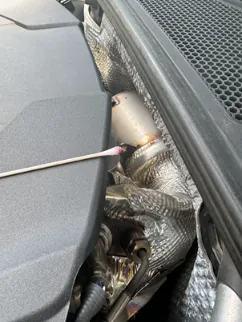
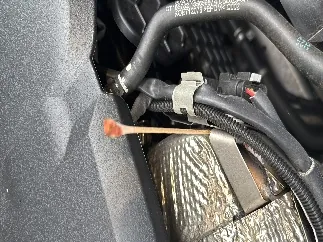
Chromium(VI)-positive: findings in various areas of the engine compartment
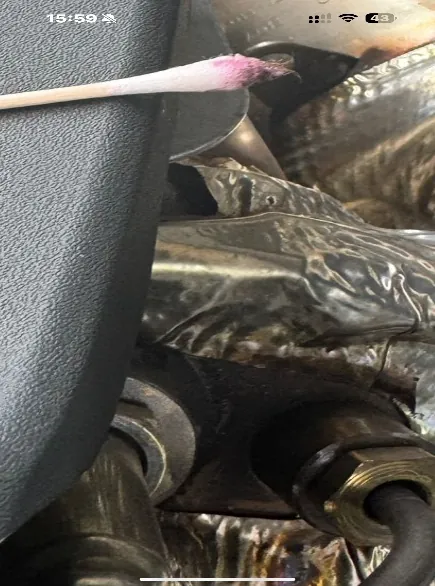
The purple discoloration of the test sticks or reaction samples clearly indicates chromium(VI)-positive results. The dust particles, which can be absorbed through the skin, are located directly in a mechanic’s working area.
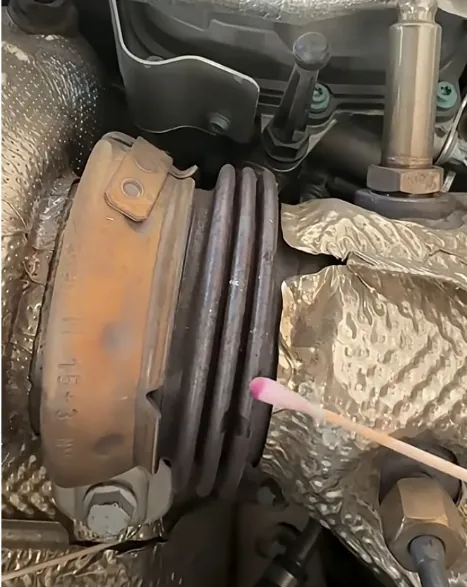
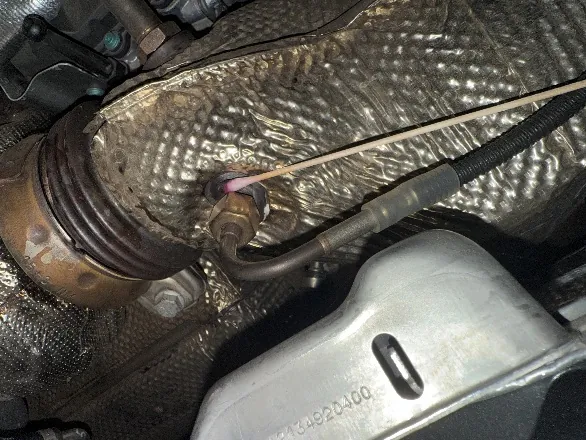
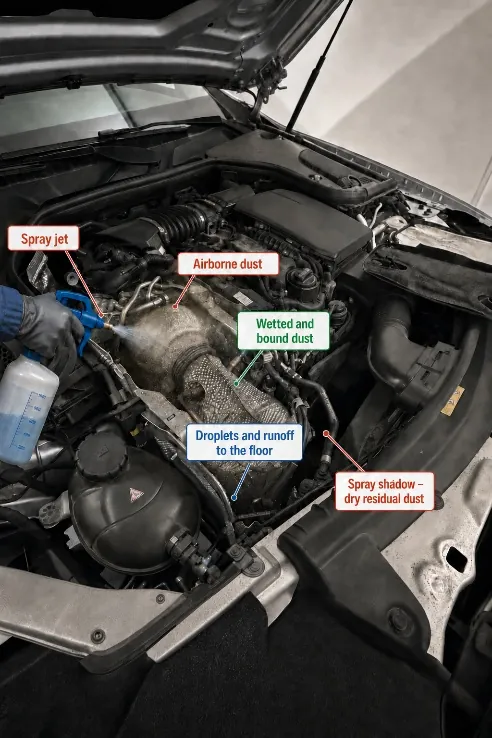
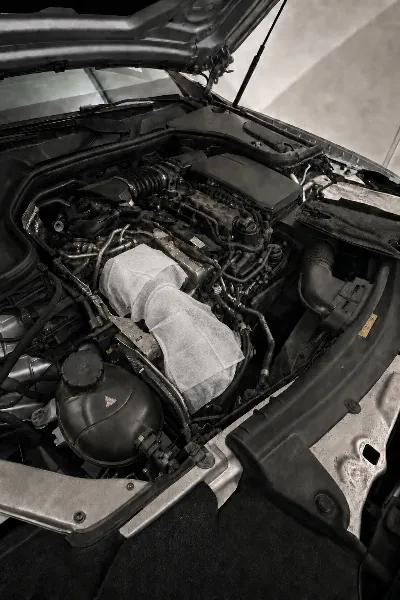
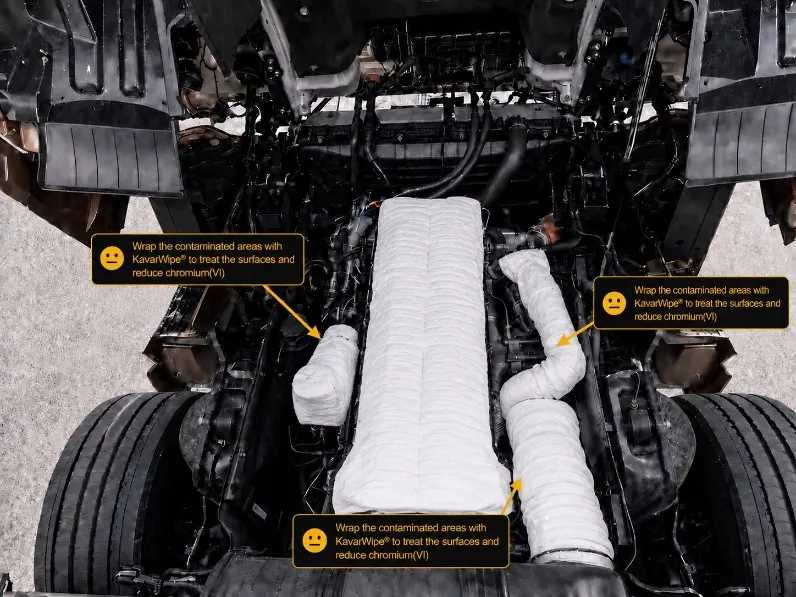
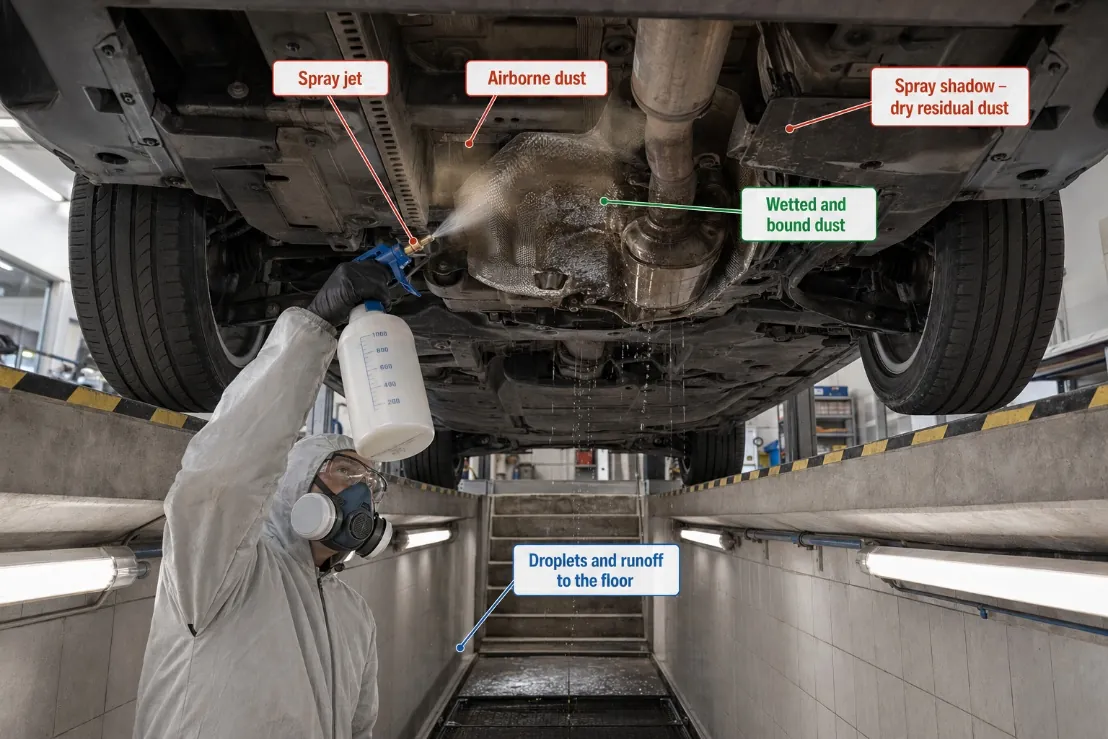
In some models, chromates have also been detected in the intake area of the cabin ventilation. To what extent they reach the vehicle interior is not yet known. A theoretical risk that the dust generated in the engine compartment may also reach the driver and passenger area, in trucks the driver’s cab, cannot be ruled out.
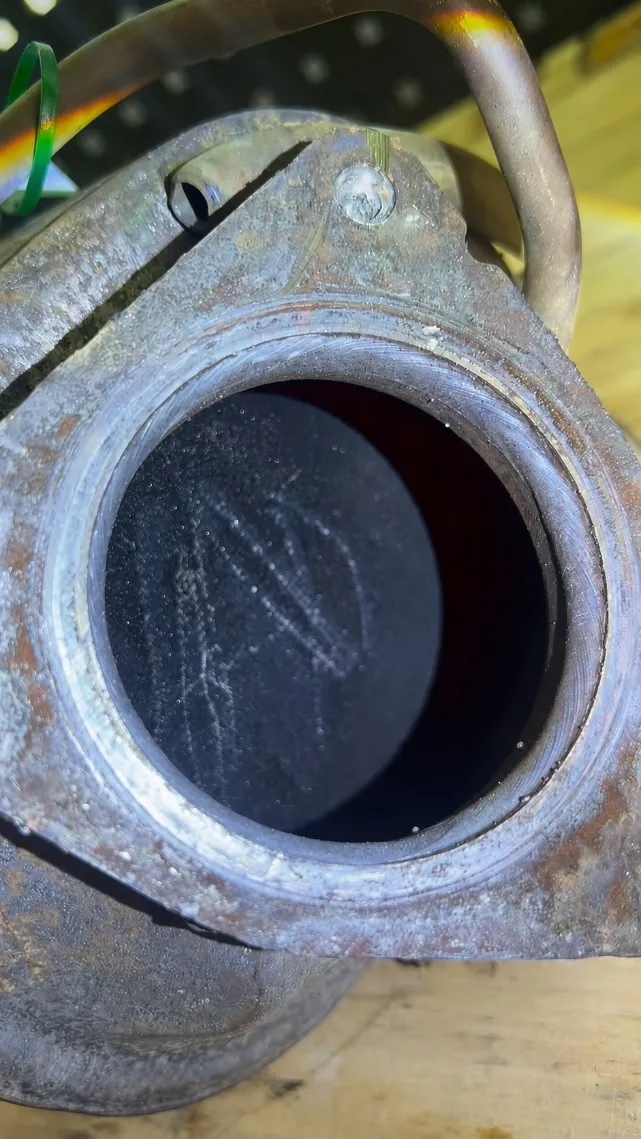
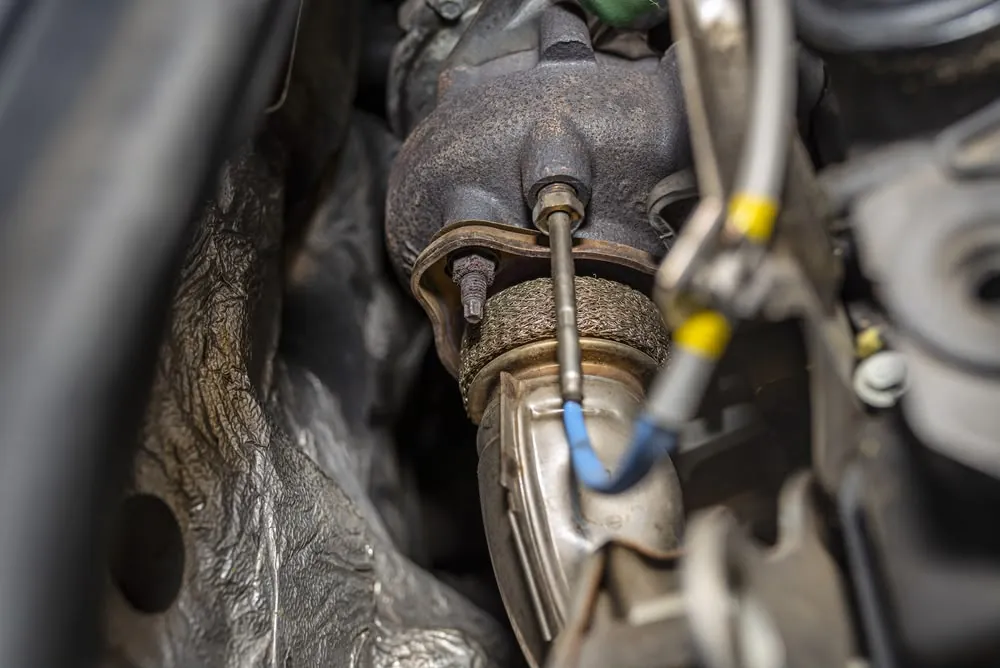
Chromium(VI) compounds on surfaces and connecting parts
Everyone knows them, the yellowish, greenish and whitish deposits in the flange area, at the edges of heat shields and around thermally insulated double-walled components, on diesel particulate filters, downpipes, turbochargers, catalytic converters, mufflers and complete SCR systems.
These dusts, which can be absorbed through the skin and become airborne, can likewise consist of pure chromates or chromate-containing deposits and therefore pose a hazard to health and the environment. In almost all cases they are calcium chromate and/or sodium chromate.
Drivers and construction machinery operators also come into contact with chromates
Depending on the vehicle type, carcinogenic chromates also form in areas where car and truck drivers or construction machinery operators work themselves:
- when checking the oil level
- when checking or topping up operating fluids
- during light maintenance work
Always keep cleaning cloths at hand before these tasks, because chromium(VI) compounds are extremely dangerous if absorbed through the skin or, in the worst case, swallowed. Carefully wipe the work area in the engine compartment with KavarWipe® cloths and place the used cloths in the enclosed bags, which you return to us for disposal.
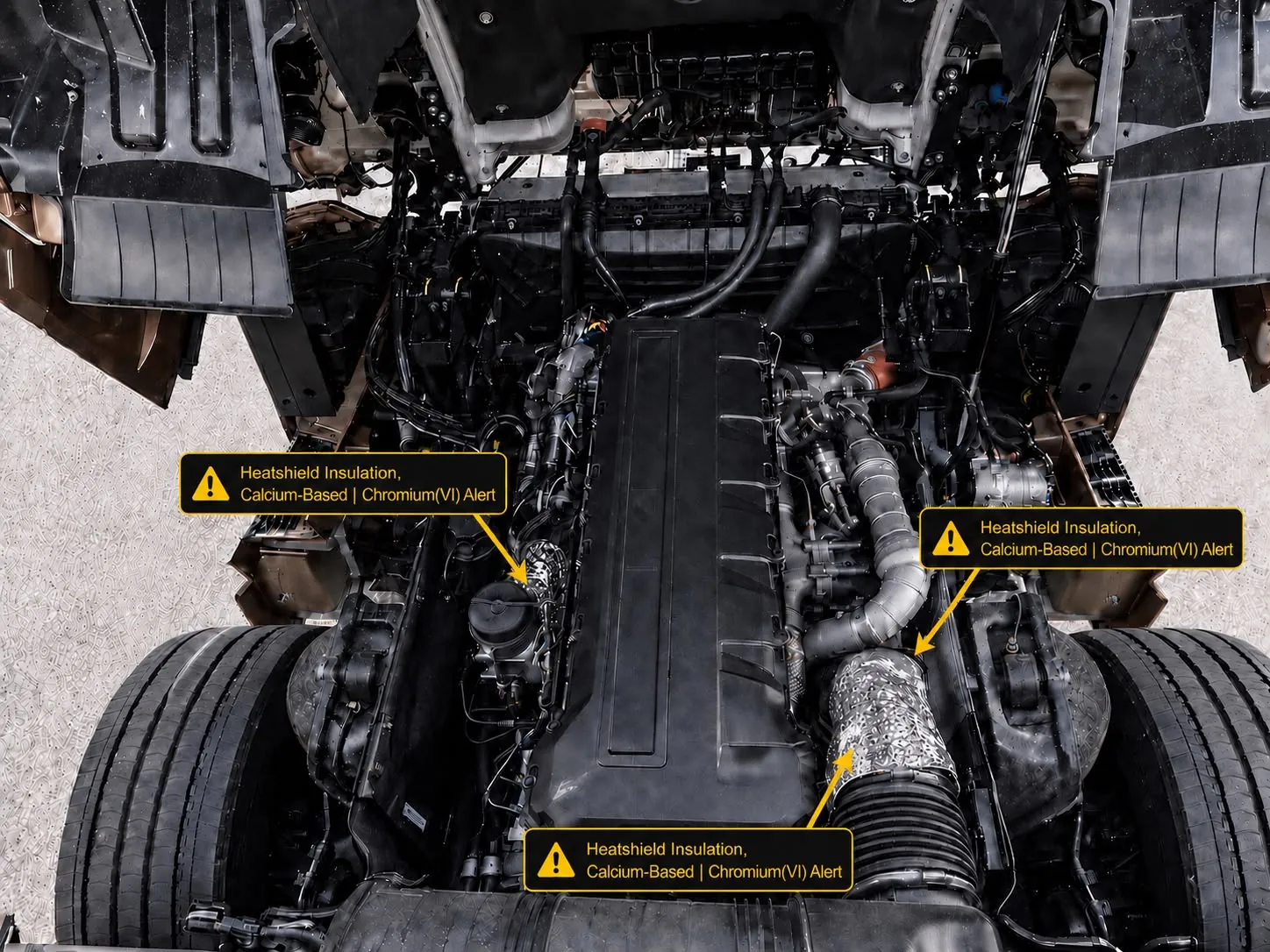
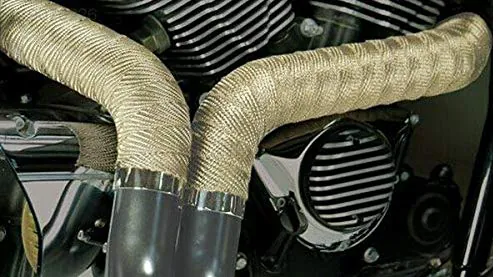
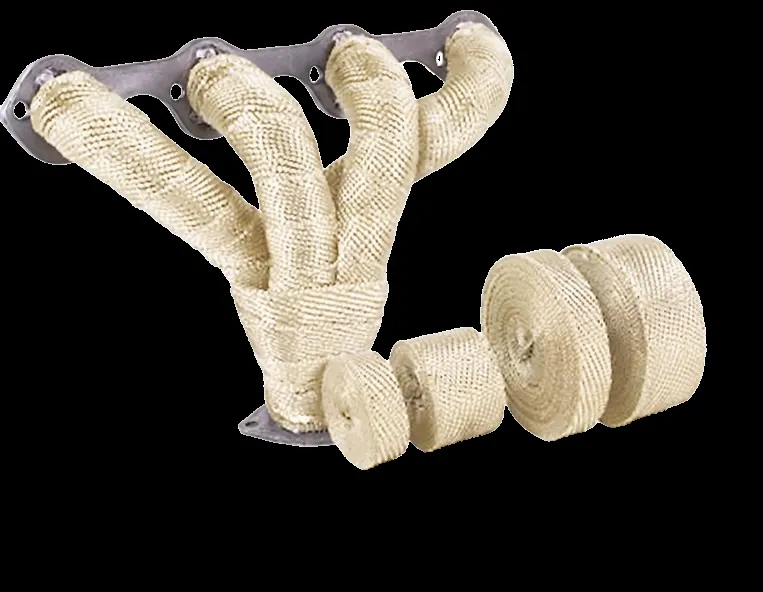
Glass or basalt insulation tape around stainless steel exhaust pipes
This “solution” is particularly problematic. The calcium-containing glass fibers do not only react on the surface of the wrapped pipe. Detached fibers can settle anywhere in the installation space on other hot stainless steel components and form chromates there, far away from the actual insulation.
Carefully remove the fabric tape and clean the engine compartment with KavarClean® products. Ask your chromate experts about calcium-free insulation solutions, including in tape form.
As someone affected and bearing the consequences, you need KavarClean® and KavarWipe®
For every maintenance operation in which you come into even the slightest contact with this carcinogen, for your own protection and to protect our environment. To prevent the formation of carcinogenic dust, a calcium-free heat shield would have to be used. Speak to the vehicle manufacturer, who will be aware of the problem.